About Me
Behavior analyst, educator, and researcher exploring how people and cultures shape one another—and how both can improve.
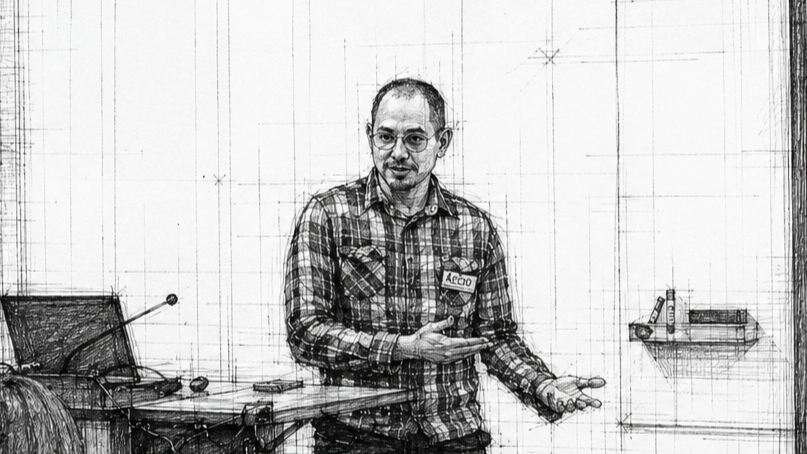
Personal Narrative
My work addresses a central question: how do behavioral and cultural processes select the practices that shape communities, social phenomena, and individuals’ behaviors themselves? I pursue this through conceptual, experimental, and applied studies on social behavior, cultural selection, ethical self-control, and social justice. My aim is to analyze the relationships between individual behavior and cultural practices, guide students in this work, and produce socially relevant, ethical science.
I came to UNT in 2024 with an established research program built at the Universidade Federal do Pará, and here I have worked to consolidate it, maintaining the aims, productivity, and collaborations that led to my appointment. My current scholarship builds on the foundation I developed within the Social Behavior and Cultural Selection Lab, where I mentored approximately 20 doctoral, master’s, and undergraduate students — work that, with my prior publications, earned three years of tenure credit at appointment. I am extending that program at UNT through two labs. The Evolutionary Culture Lab focuses on conceptual and experimental research on social behavior and cultural selection. The Social Justice Lab focuses on community-engaged work with vulnerable populations. Together, they support roughly sixteen students across four active projects.
My scholarly productivity has remained strong. Since my appointment in 2024, I have published six peer-reviewed articles and two book chapters, with two articles and four invited chapters in press and two articles under review, including a commentary forthcoming in Behavior and Brain Sciences. These empirical, conceptual, and applied contributions in culturo-behavior science reflect my commitment to collaborative scholarship with students and colleagues in the United States, Norway, and Brazil. My CV reports per-publication quality indicators (SCImago SJR and quartile, Clarivate JIF, and the Qualis CAPES rating for Brazilian journals, in which A1 is the highest tier). These contributions support an emerging national reputation, including invited talks at the Texas Association for Behavior Analysis and the International Congress of Interbehaviorism and presentations at ABAI conferences at home and abroad.
My teaching follows from the same commitments. I want students to learn behavior analysis as a way of thinking about the world and themselves. Because much of what I teach is conceptually demanding, I work to make material accessible without reducing its complexity. At UNT, I have taught across the undergraduate, master’s, and doctoral programs, including the ABA Capstone, PORTL Practicum, Survey of Literature in the Experimental Analysis of Behavior, and Behavior Analysis from a Systems Perspective. Across my combined evaluations, students rate my overall teaching, contribution, and effectiveness at a median of 4.7 of 5, with enthusiasm and encouragement to express themselves at 4.9. Student comments consistently point to my passion for teaching and my ability to make complex topics understandable.
Mentoring is where my teaching and scholarship meet. At UNT, roughly sixteen undergraduate and graduate students take part in research activities, discussions, and projects across my two labs; from this group, students move into formal graduate mentorship, and I currently chair two master’s theses, with two doctoral students approved to begin in Fall 2026. This continues the mentorship I practiced in Brazil, where my students completed master’s and undergraduate capstone theses on social issues, organizational interventions, and culturally related clinical problems. My goal is to help students develop independence: to identify questions that matter, learn the tools needed to address them, and produce work that contributes to the discipline and to the communities affected by the problems we study.
My service is closely connected to this agenda. At UNT, I mentor the Behavior Analysis Student and Alumni Association, serve on the Undergraduate Curriculum Committee and the HPS Awards and Scholarship Committee, and belong to the Learning Science Institute. My disciplinary service is broader: I am associate editor for three journals and an editorial board member for a fourth, review regularly for behavior-analytic and psychology journals, and take part in the Think Tank in Culturo-Behavior Science and the Theory and Philosophy Research Group in Brazil, contributing to the infrastructure through which behavior analysts evaluate and develop scholarship.
The next phase is to deepen this foundation: to grow both labs, turn current studies into publications, and gather preliminary data for competitive external applications, including NSF and NIH proposals I am preparing to submit in July and August 2026. I see my trajectory as one of continuity and growth: bringing an established international program to UNT, building local research infrastructure, training students, and contributing to behavior analysis as a science capable of addressing social problems with rigor, ethics, and justice.